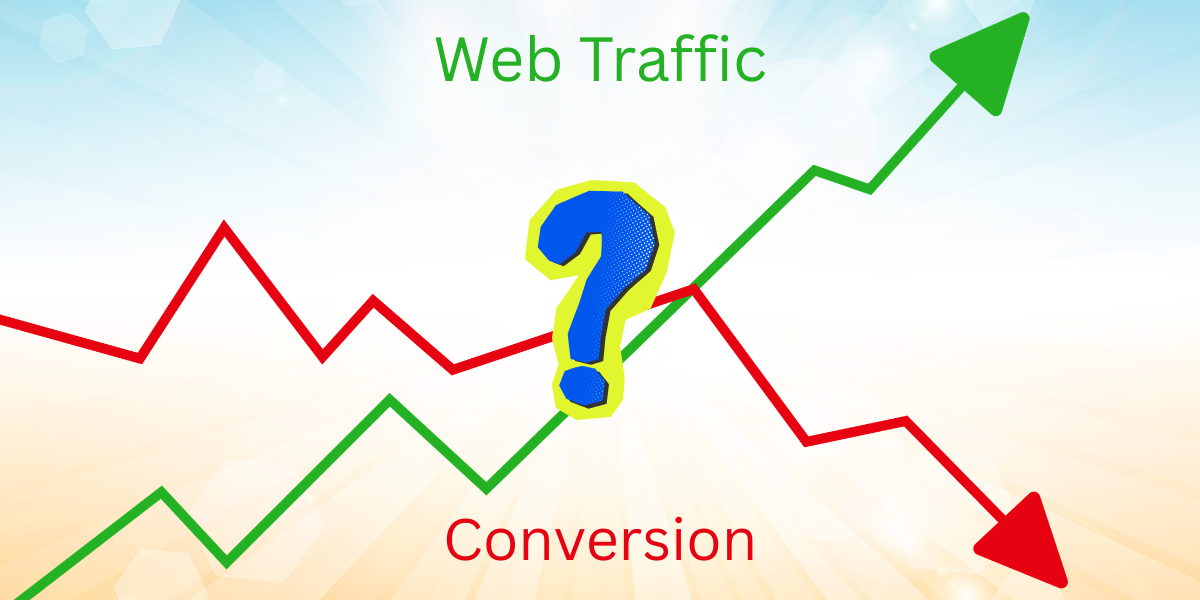
Many businesses celebrate when their blog starts getting traffic. Rankings improve. Visitors increase. Analytics dashboards look promising. Yet something still feels wrong.
Your blog traffic is growing, but conversions stay close to zero.
If this situation sounds familiar, you are not alone. Many websites generate thousands of monthly visits without turning those readers into leads or customers.
The problem usually lies in the gap between SEO and CRO.
SEO helps people find your content through search engines like Google. However, conversion rate optimisation (CRO) ensures that those visitors take action once they land on your page.
Without CRO, traffic remains just a number.
In this guide, we will break down why blogs attract visitors but fail to convert. More importantly, we will show you how to align SEO and CRO strategies so your blog becomes a real growth engine.
Traffic Alone Is Not a Marketing Strategy
Many brands focus heavily on ranking for keywords. They invest time in content production and link building. Eventually, the blog starts attracting traffic.
However, traffic itself does not generate revenue.
A visitor must complete an action first. That action may include:
- Subscribing to a newsletter
- Booking a consultation
- Downloading a resource
- Purchasing a product
- Requesting a service
Without these actions, your traffic has little business value.
Many marketers track performance through tools like Google Analytics. They see growing visitor numbers and assume the strategy works.
However, analytics alone cannot solve the problem.
The real question is this: why are visitors leaving without converting?
To answer that, we need to examine the most common causes.
Your Blog Attracts the Wrong Audience
One major reason blogs fail to convert is misaligned search intent.
SEO may bring large volumes of traffic, but those visitors may not be potential customers.
For example, imagine you run a digital marketing agency. Your blog ranks for a keyword like “what is SEO”. This topic attracts students, beginners, and curious readers.
However, those people may not be looking for professional services.
So they read the article and leave.
Your traffic increases, but your leads do not.
This situation happens frequently when websites chase high-volume keywords instead of high-intent keywords.
High-intent keywords usually include phrases such as:
- SEO agency services
- hire digital marketing agency
- SEO strategy for businesses
- professional SEO consultation
Visitors who search these phrases are much closer to making a decision.
Therefore, aligning content topics with business intent improves conversion potential dramatically.
Your Blog Does Not Guide the Reader Forward
Many blogs provide information but fail to guide readers toward the next step.
After reading the article, the visitor has no idea what to do next. When that happens, the user simply leaves the page. Strong blogs act like guided journeys. They move the reader from curiosity to action.
You can achieve this by placing strategic elements throughout the article.
These include:
- clear call-to-action buttons
- internal links to relevant services
- downloadable resources
- consultation invitations
Without these elements, your blog becomes an informational dead end.
Your content may educate readers, but it does not encourage engagement.
Weak Calls to Action Kill Conversions
Even when blogs include calls to action, they often feel vague or passive.
For example, many websites place a simple line at the bottom of the page that says:
“Contact us for more information.”
Most readers ignore this.
Strong calls to action should feel specific and relevant to the content.
For instance, if the blog discusses SEO strategy, the CTA could say:
“Want a custom SEO roadmap for your business? Book a strategy call with our team.”
This approach connects the article’s topic with a practical next step.
Placement also matters.
CTAs should appear:
- within the article
- after key insights
- at the end of the blog
This ensures readers see the opportunity before they leave.
Your Content Solves Curiosity but Not Problems
Some blogs answer surface-level questions. They explain basic concepts but stop before offering actionable solutions.
Readers gain knowledge, but they do not see a reason to engage further.
Content that converts usually solves deeper problems.
For example, instead of writing only about “what is SEO”, you might write about:
- How businesses lose revenue from poor SEO
- How to fix common ranking issues
- How SEO drives business growth
When readers see real solutions, they become more interested in professional help.
This creates a natural path from education to conversion.
Poor User Experience Reduces Trust
Even excellent content struggles to convert when the user experience feels frustrating.
Visitors make quick decisions about websites. If something feels slow or confusing, they leave.
Common UX problems include:
- slow loading pages
- cluttered layouts
- intrusive pop-ups
- difficult navigation
Search engines also consider these factors when ranking pages.
Modern SEO now overlaps heavily with user experience optimisation.
For instance, Google evaluates page experience signals through metrics such as Core Web Vitals in Google Search Console.
If your blog performs poorly in these areas, users may abandon the page before reading the content.
A clean, fast, and easy-to-read layout significantly improves engagement and conversions.
Your Blog Lacks Trust Signals
Visitors rarely convert on websites they do not trust.
Trust signals reassure readers that your brand is credible.
Without them, even valuable content struggles to convert.
Some effective trust signals include:
- testimonials from real clients
- case studies with measurable results
- industry certifications
- media mentions
- transparent company information
When readers see proof of expertise, they feel more comfortable taking action.
Trust transforms curiosity into confidence.
Your Blog Is Missing Strategic Internal Links
Internal linking plays a major role in both SEO and CRO.
From an SEO perspective, internal links help search engines understand the structure of your website.
From a CRO perspective, they guide readers toward valuable pages.
For example, a blog about SEO strategy should naturally link to:
- Your SEO service page
- Related case studies
- Deeper guides about ranking strategies
These links extend the reader’s journey.
Instead of leaving the site, visitors explore additional pages. This increases both engagement and conversion opportunities.
Data Reveals Where Conversions Break
To fix conversion problems, you must analyse user behaviour.
Analytics tools provide valuable insights into what visitors actually do.
For instance, platforms like Hotjar show heatmaps and user recordings. These tools reveal where readers scroll, click, and stop engaging.
You may discover patterns such as:
- Users leaving halfway through the article
- Readers ignoring CTAs
- Confusion around navigation elements
Once you identify these friction points, you can redesign the page experience.
Small adjustments often produce significant improvements in conversion rates.
The Real Power of Combining SEO and CRO
Many companies treat SEO and CRO as separate disciplines.
However, the most successful digital strategies combine them.
SEO brings visitors to your website.
CRO turns those visitors into customers.
When these two systems work together, your blog becomes far more valuable.
Instead of chasing traffic numbers alone, you focus on meaningful engagement.
Each article becomes part of a larger conversion journey.
Visitors discover your brand through search. They learn through your content. Then they take action because the experience feels clear and trustworthy.
That is the real goal of modern content marketing.
Turning Blog Traffic Into Real Business Growth
Getting traffic is an important milestone. It means your SEO strategy is working. People are discovering your content.
However, traffic alone does not build a business.
Your blog must guide readers, solve meaningful problems, and offer clear next steps.
When SEO and CRO align, something powerful happens. Your content stops being passive information. It becomes a strategic tool that drives leads, conversations, and long-term growth.
If your blog attracts visitors but struggles to convert them, it may be time to rethink the strategy behind it.
At Reach Rocket Media, we specialise in building integrated SEO and conversion strategies that transform traffic into real results. Connect with Reach Rocket Media today, and let’s turn your blog into a powerful growth engine for your business.