Many advertisers launch Performance Max campaigns expecting better reach, automation, and improved conversions. The promise sounds appealing. You give the platform your assets and goals. Then the system finds the best opportunities automatically.
However, many marketers soon notice a frustrating issue. Their Performance Max campaign is burning budget on brand terms.
You may see strong conversion numbers in your account. At first glance, the campaign appears successful. But when you examine the data carefully, you realise something important. A large portion of conversions comes from users who were already searching for your brand.
Platforms like Google Ads are designed to maximise performance signals. If brand searches convert easily, the system will prioritise them.
For businesses, this behaviour creates a problem. You may end up paying for traffic you would have received anyway through organic search or existing brand demand.
Understanding why this happens is essential if you want to control your advertising spend and improve campaign efficiency.
What Performance Max Campaigns Actually Do?
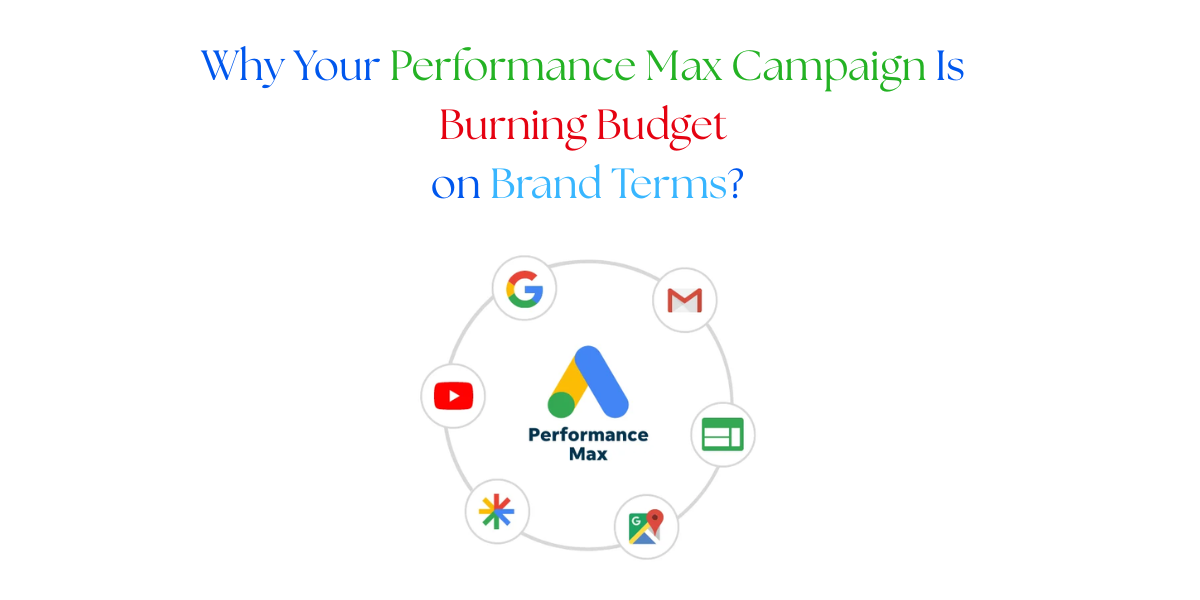
Performance Max campaigns are designed to run across multiple advertising channels simultaneously.
Instead of creating separate campaigns for each network, the system distributes ads across:
- Search
- Display
- Video
- Discovery
- Shopping
- Gmail Placements
The automation relies heavily on machine learning.
You provide creative assets, audience signals, and conversion goals. The algorithm then determines where ads should appear.
The system constantly tests placements and adjusts bids to maximise conversions.
This automation can be powerful. Yet it also creates less transparency compared with traditional campaign types.
Advertisers often have limited visibility into exactly where their budget is going.
This is where brand term spending often becomes hidden.
Why Brand Terms Attract Performance Max Budget?
Brand searches typically convert at very high rates.
When someone searches for your brand name, they already know your business. Their purchase intent is strong.
From the perspective of the campaign algorithm, these searches are extremely valuable.
The machine learning system identifies that brand searches generate quick conversions. As a result, it often prioritises these queries.
This behaviour aligns with the campaign objective. The system tries to maximise conversions at the lowest cost.
However, it does not consider whether those conversions would have happened organically.
For example, if a user searches your brand directly in Google Search, your website will likely appear in the top organic position.
Yet the Performance Max campaign may still display an ad for that same search.
If the user clicks the ad instead of the organic listing, the campaign receives credit for the conversion.
In reality, that conversion might have occurred even without paid advertising.
The Visibility Problem With Performance Max
One major challenge with Performance Max campaigns is limited reporting.
Traditional search campaigns allow advertisers to review detailed search term reports. These reports reveal which keywords triggered ads.
Performance Max campaigns offer far less transparency.
You can see some insights about categories or themes. But you cannot easily view every search term.
This makes it harder to identify how much budget is being spent on brand queries.
Many advertisers only discover the issue after analysing overall account performance.
For instance, organic traffic may decline slightly while paid brand conversions increase.
When this happens, it often means your Performance Max campaign is capturing brand searches.
Without proper controls, this behaviour can quietly increase advertising costs.
Why This Problem Affects Budget Efficiency
Brand search traffic is usually the easiest traffic to convert.
Users already trust your brand. They are simply looking for the quickest path to your website.
If your Performance Max campaign captures these clicks, the algorithm will continue investing in them.
Over time, a large share of the budget may go toward brand terms.
This leaves less budget available for new customer acquisition.
Instead of reaching new audiences, the campaign keeps targeting people who already know your business.
This reduces the overall growth potential of your advertising strategy.
In other words, your campaign may look successful in reports while failing to expand your market reach.
How To Detect Brand Spending in Performance Max?
Although reporting is limited, there are ways to detect brand spending patterns.
First, compare your brand search campaign performance with Performance Max conversions.
If brand search volume suddenly decreases while Performance Max conversions increase, brand capture may be occurring.
Second, monitor overall organic brand traffic.
If your brand name ranks strongly in organic results but paid conversions rise, ads may be intercepting that traffic.
Third, analyse campaign timing and attribution patterns.
If conversions appear unusually fast after impressions, it may indicate brand queries rather than discovery-based traffic.
These signals help reveal whether your campaign is prioritising brand searches.
Using Brand Exclusions to Protect Budget
One effective solution is implementing brand exclusions.
Brand exclusions prevent Performance Max campaigns from bidding on specific branded search queries.
This allows you to control where your budget goes.
You can then allocate brand traffic to dedicated brand campaigns or rely on organic search visibility.
Brand exclusions also ensure your Performance Max campaign focuses on discovering new customers.
This adjustment helps improve the quality of campaign expansion.
It also creates clearer attribution across your advertising strategy.
Separate Brand and Non-Brand Strategies
A well-structured advertising account separates brand traffic from growth campaigns.
Brand campaigns typically serve defensive purposes. They ensure competitors do not capture your branded searches.
These campaigns usually operate with lower budgets and controlled bids.
Non-brand campaigns, however, focus on discovery.
They target users searching for products, services, or problems related to your industry.
Performance Max campaigns often work best when they focus on these non-brand opportunities.
Separating strategies improves budget control and campaign clarity.
It also provides better insight into which channels are driving new customers.
Improving Performance Max Signals
Performance Max relies heavily on signals.
The quality of those signals influences how the algorithm allocates budget.
To guide the campaign toward new audiences, you should provide strong audience input.
These may include:
- customer lists
- in-market audiences
- remarketing segments
- website behaviour data
Providing richer signals helps the system understand which users are more valuable.
Over time, this reduces the tendency to rely heavily on brand searches.
Instead, the algorithm explores broader opportunities.
Aligning Automation With Strategy
Automation tools can be powerful when used correctly.
However, automation must still align with business goals.
Performance Max is designed to optimise for conversions. But the definition of success must come from your strategy.
If your goal is new customer acquisition, your campaigns must be structured accordingly.
Without proper controls, automation may prioritise easy wins rather than long-term growth.
Managing Performance Max effectively requires ongoing monitoring, testing, and adjustments.
Automation works best when guided by strategic oversight.
Make Performance Max Work for Growth
Performance Max campaigns can deliver impressive results. Yet without careful management, they may spend too much budget on brand terms.
When this happens, you pay for conversions that might have occurred anyway.
By identifying brand spending patterns, implementing exclusions, and separating brand strategies, you can regain control of your advertising budget.
This approach allows your campaigns to focus on what truly matters — acquiring new customers and expanding your reach.
If you want to optimise your advertising strategy and ensure your campaigns drive real business growth, our team at Reach Rocket Media can help.
We specialise in performance-driven PPC strategies that maximise ROI while preventing wasted ad spend. Connect with Reach Rocket Media today, and let’s turn your campaigns into a scalable growth engine.